01
2006 — 2009
Falcon 1
Small-lift, expendable
First private liquid rocket to orbit.
2 stages · Merlin 1C · 570 kg to LEO
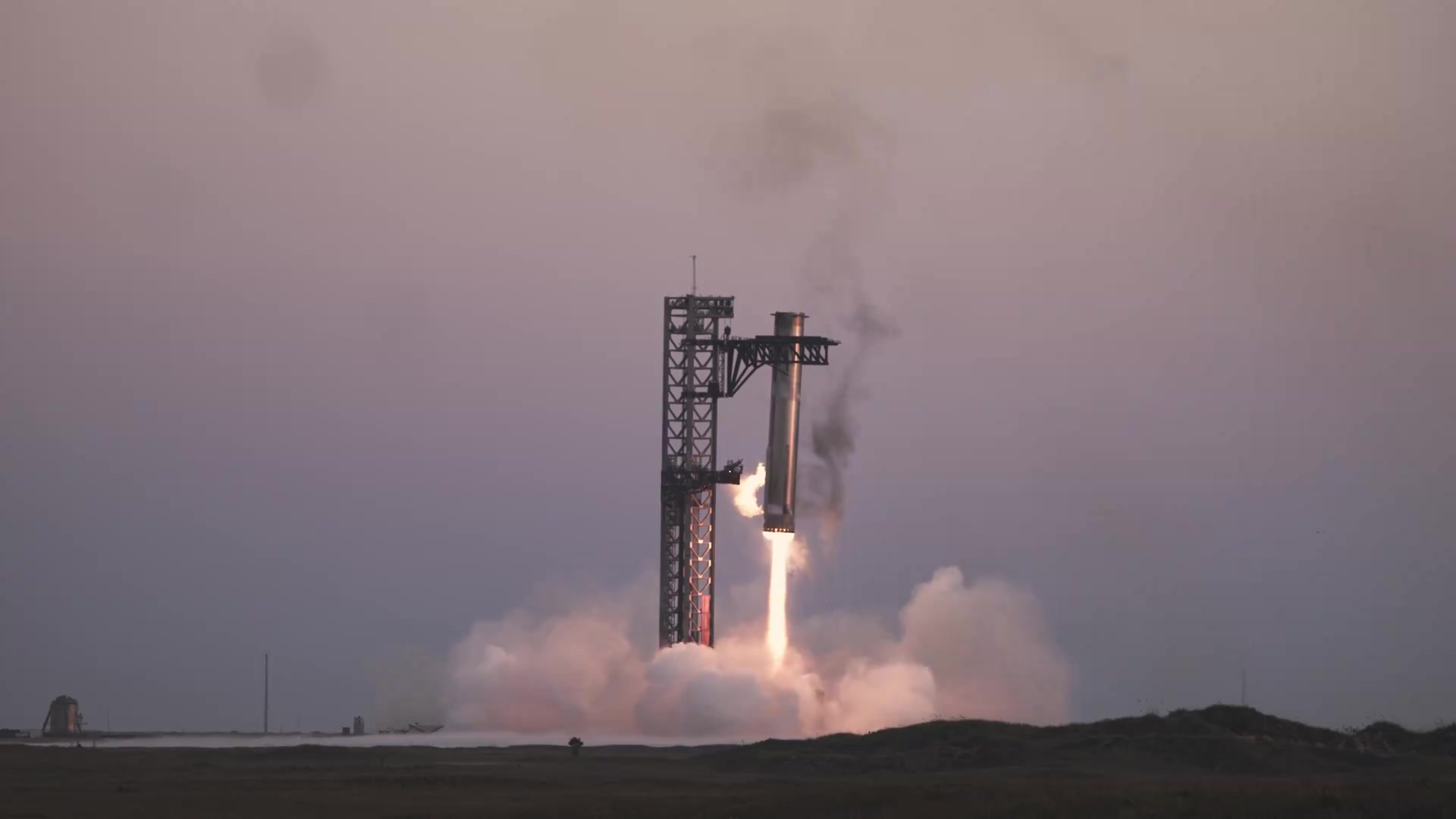
The complete SpaceX history · 2002–2026
From a rented warehouse in El Segundo to the first private orbit, the first orbital landing, and a ship built for Mars — twenty-four years of SpaceX history, told in one page.

The assignment
This SpaceX history is not a contractor’s brochure. The company was founded because the shuttle was retiring, Mars was still a poster, and every rocket on Earth was thrown away after a single use. What follows is the long argument that this was solvable.
“You want to wake up in the morning and think the future is going to be great.”

Chapter 01 · 2002
The wager
Space Exploration Technologies was founded on March 14, 2002 in El Segundo, California — not to sell another launch, but to make life multiplanetary.
Elon Musk put roughly half of his PayPal fortune into a company that most of the industry expected to fail. Early hires included engine designer Tom Mueller. Gwynne Shotwell joined that September and would become president and chief operating officer — the person who turned a warehouse rocket shop into the world's launch provider.
The premise was blunt: access to space was too expensive because rockets were thrown away. If the cost of orbit could be collapsed, a civilization on Mars stopped being science fiction and became an engineering schedule.

Chapter 02 · 2006 — 2009
Falcon 1
Falcon 1 was a two-stage, liquid-fueled rocket developed with private money on a coral atoll in the Marshall Islands. The first three flights failed. The fourth rewrote the industry.
Flight 1 (March 24, 2006) was lost to a fuel leak and fire. Flight 2 (March 21, 2007) failed after residual slosh defeated roll control. Flight 3 (August 3, 2008) did not survive stage separation. Cash was nearly gone.
On September 28, 2008, Falcon 1 Flight 4 reached Earth orbit — the first privately developed liquid-fueled rocket ever to do so. A fifth flight on July 14, 2009 lofted RazakSAT, then the vehicle was retired. The company had earned the right to build something larger.
Flight 01
Failure
24 Mar 2006
Fuel leak and fire
Flight 02
Failure
21 Mar 2007
Roll-control slosh
Flight 03
Failure
03 Aug 2008
Stage separation
Flight 04
Orbit
28 Sep 2008
First private liquid orbit

Chapter 03 · 2010 — 2014
Falcon 9 & Dragon
Falcon 9 flew for the first time on June 4, 2010. Six months later Dragon became the first commercial spacecraft to launch, orbit Earth, reenter, and be recovered.
NASA's Commercial Orbital Transportation Services program and a $1.6 billion Commercial Resupply Services contract gave the young company a destination that mattered: the International Space Station.
On May 22, 2012, Dragon C2+ berthed with the station — the first privately built spacecraft in history to do so. Regular cargo flights followed. What had been a national capability was now also a commercial one.

Chapter 04 · 2015 — 2017
The landing
The industry treated first stages as disposable. SpaceX treated them as airplanes that had not yet learned to land.
After a cargo loss on CRS-7 in June 2015, Flight 20 (ORBCOMM-2) on December 21, 2015 put an orbital-class booster down on Landing Zone 1 — the first time it had ever been done. On April 8, 2016 a booster landed on the droneship Of Course I Still Love You.
On March 30, 2017, booster B1021 flew again on SES-10: the first reflight of an orbital-class rocket. Reuse was no longer a slide. It was a business model.

Chapter 05 · 2018
Falcon Heavy
On February 6, 2018 the most powerful operational rocket in the world lifted off from Kennedy Space Center. In the payload fairing: a cherry-red Tesla Roadster and a mannequin in a spacesuit, Starman, bound for a heliocentric orbit.
The two side boosters returned in unison to Landing Zones 1 and 2. The center core missed the droneship — a reminder that the hard part was not the spectacle. It was doing it again, cheaply, every week.
Falcon Heavy opened a class of missions that had belonged only to governments: heavy national-security payloads, large science spacecraft, and later the first elements of a much bigger architecture.

Chapter 06 · 2019 —
Starlink
The first sixty Starlink satellites rode a Falcon 9 on May 24, 2019. The point was not another constellation. It was a utility: high-bandwidth internet from low Earth orbit, anywhere on the planet.
By mid-2026 Starlink was operating on the order of ten thousand satellites — the majority of all active spacecraft — and serving about twelve million customers in 164 countries and territories. Direct-to-cell service put emergency and messaging connectivity on ordinary phones.
The same factory cadence that made Falcon 9 the world's launch provider now manufactured spacecraft the way other companies manufacture cars. Orbit had an industrial base.

Chapter 07 · 2020 —
Human spaceflight
On May 30, 2020, NASA astronauts Doug Hurley and Bob Behnken rode Crew Dragon Demo-2 from Kennedy Space Center — the first crewed orbital launch from American soil since the Space Shuttle retired in 2011, and the first on a commercial spacecraft.
Crew-1 opened regular station rotation. Inspiration4, in September 2021, sent the first all-civilian crew to orbit. Polaris Dawn, in September 2024, conducted the first commercial spacewalk. Fram2, launching March 31, 2025, became the first human spaceflight over Earth's poles.
SpaceX reports that Dragon has safely flown 78 crewmembers from 20 countries across 20 missions, including seven commercial astronaut flights. Crew-13 — Watkins, Delaney, Kutryk, and Teteryatnikov aboard Dragon Grace — is targeted no earlier than September 12, 2026 from SLC-40.

Chapter 08 · 2019 — 2026
Starship
Starship is a fully reusable stainless-steel stack: Super Heavy below, Ship above, methane and oxygen through Raptor engines. It is the vehicle the company was founded to build.
Integrated flight tests began April 20, 2023. Flight 4 in June 2024 brought a controlled splashdown. Flight 5 on October 13, 2024 caught Super Heavy in the launch tower's mechanical arms. Flight 9 on May 27, 2025 flew a Super Heavy booster for the second time.
Version 3 first flew on May 22, 2026 from a new pad at Starbase. Flight 13 on July 24 lofted a batch of next-generation Starlink V3 satellites. Flight 14, targeted for late August pending regulatory approval, is planned as the first Starship trip to low Earth orbit and the first attempt to catch the Ship in the tower arms. NASA selected Starship as the Artemis human landing system.
The machines
01
2006 — 2009
Small-lift, expendable
First private liquid rocket to orbit.
2 stages · Merlin 1C · 570 kg to LEO
02
2010 —
Medium-lift, reusable
The world's workhorse launch vehicle.
9 Merlins · 22.8 t to LEO · RTLS / ASDS
03
2018 —
Heavy-lift, reusable
Three cores. Side boosters fly home.
27 Merlins · 63.8 t to LEO · 3 cores
04
2010 —
Cargo and crew
First private ship to the ISS, then people.
Cargo · Crew · 78 people flown
05
2019 —
Constellation
Broadband, then direct-to-cell, from LEO.
~10,000 sats · ~12M customers
06
2023 —
Super heavy, fully reusable
The vehicle built for the Moon and Mars.
Raptor 3 · Super Heavy + Ship · V3
2002
Founded
El Segundo, California
165
Falcon 9 flights, 2025
More than the rest of Earth
78
Crewmembers flown
20 countries, 20 Dragon missions
12M
Starlink customers
As of June 2026 · 164 countries
13
Starship flight tests
Through July 2026
1st
Orbital-class landing
December 21, 2015
Updated 14 August 2026
14 Aug 2026
The $60 billion all-stock acquisition of Anysphere, the company behind Cursor, closes. The coding agent now sits with xAI under SpaceX.
6 Aug 2026
Tesla and SpaceX put $16.8 billion into a chip factory in Grimes County — more than 100 million square feet, built for Optimus, Cybercab, and orbital compute.
4 Aug 2026
Q2 revenue hits $7.8 billion, up 92 percent. Starlink connectivity leads at $4.3 billion, with 12 million subscribers at quarter's end.
24 Jul 2026
Version 3 flies from Pad 2 at Starbase and deploys a full batch of next-generation Starlink V3 satellites.
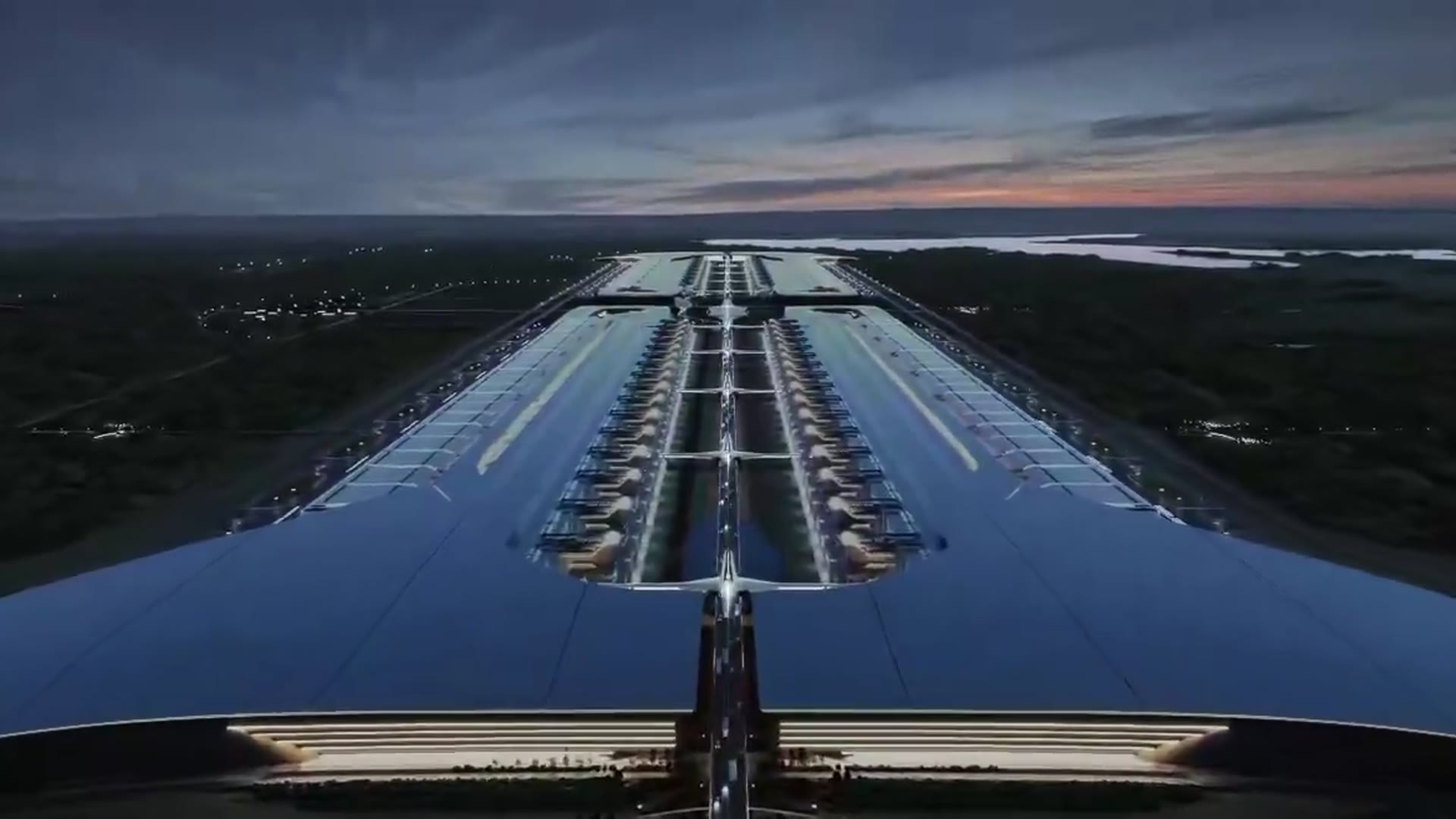
August 2026 · Tesla × SpaceX
Terafab
Tesla and SpaceX are building a vertically integrated chip factory in Grimes County, Texas — logic, memory, packaging, and test under one roof, sized for the compute both companies say they cannot buy.
On August 6, 2026 they committed an initial $16.8 billion. The campus is planned at more than 100 million square feet. It will cut edge chips for Optimus and Cybercab, and high-power chips for SpaceX data centers in orbit. Musk called it the largest and most valuable building on Earth.
$16.8B
Initial investment
100M+
Sq ft planned
3,000+
Jobs
Texas
Grimes County
On the pad · not yet flown
Confirmed targets only. Dates slip. Nothing here is treated as history until it leaves the ground.
Late August 2026
Pending FAA approvalFirst planned Starship flight to low Earth orbit, and the first attempt to catch the Ship in the tower. Working Starlink V3 satellites are intended to ride along.
NET 12 September 2026
NASA targetWatkins, Delaney, Kutryk, and Teteryatnikov launch on Dragon Grace from SLC-40 — the next ISS crew rotation, and Watkins' second Dragon flight.
SpaceX history timeline · 2002 — 2026
Every turning point in SpaceX history from the El Segundo warehouse to Cursor joining the company — failures included. Upcoming flights sit at the end of 2026, marked as such.
Elon Musk incorporates Space Exploration Technologies in El Segundo, California, with the explicit aim of lowering the cost of spaceflight and enabling a city on Mars.
Shotwell arrives as vice president of business development and later becomes president and COO, architecting the commercial launch business.
A corroded nut leaks fuel seconds after liftoff from Omelek Island. The vehicle is lost. Two more failures will follow.
A Commercial Orbital Transportation Services Space Act Agreement funds development of Falcon 9 and Dragon for cargo — and later crew — to the ISS.
The rocket reaches space but residual slosh defeats roll control before orbital insertion.
Stage separation does not complete. The company is weeks from running out of money.
Flight 4 becomes the first privately developed liquid-fueled rocket to reach Earth orbit. The fourth flight was, by several accounts, the last one the company could afford.
A $1.6 billion Commercial Resupply Services award for twelve Dragon cargo missions keeps the lights on and sets a decade of station logistics.
A fifth flight delivers RazakSAT. Attention shifts entirely to Falcon 9.
Nine Merlin engines lift off from Cape Canaveral. The two-stage vehicle reaches orbit on its first attempt.
COTS Demo Flight 1: the first commercial spacecraft to launch, orbit, reenter, and be recovered from the ocean.
Dragon C2+ becomes the first privately built spacecraft to berth with the International Space Station.
The first operational NASA resupply mission opens a cadence that will become routine.
NASA's Commercial Crew Transportation Capability award ($2.6 billion) human-rates Dragon for astronauts.
A strut failure destroys the second stage in flight. Cargo, and months of work, fall into the Atlantic.
After delivering eleven Orbcomm satellites, Falcon 9 Flight 20 lands at Landing Zone 1 — the first time an orbital-class booster has ever come home.
CRS-8's first stage settles onto Of Course I Still Love You in the Atlantic.
A high-pressure helium bottle fails during fueling. The vehicle and payload are destroyed on the pad. Flights pause for months.
Booster B1021 flies SES-10 — the first time an orbital-class rocket has flown, landed, and flown again.
Three Falcon cores lift a Tesla Roadster and Starman toward a heliocentric orbit. The side boosters land together at the Cape.
An uncrewed Crew Dragon autonomously docks with the ISS, proving the human-rated vehicle in orbit.
Sixty satellites begin the densest communications constellation ever attempted.
Hurley and Behnken fly Crew Dragon from LC-39A. The United States launches astronauts from home soil again, this time on a commercial spacecraft.
The first operational Commercial Crew rotation opens regular astronaut transport on Dragon.
NASA selects a Starship Human Landing System for Artemis — a lunar lander derived from the same vehicle intended for Mars.
The first all-civilian orbital crew flies on Crew Dragon Resilience, funded by Jared Isaacman, and raises money for St. Jude.
The first integrated Super Heavy and Ship leaves the pad at Starbase. It does not survive ascent. The test campaign has begun.
Starship survives a hypersonic entry and makes a controlled splashdown in the Indian Ocean.
The first commercial spacewalk. Four crew members ride Dragon to a high elliptical orbit; two step into vacuum in SpaceX-designed suits.
Flight 5: the launch tower's mechanical arms catch Super Heavy on descent — a landing that does not use landing legs.
A private Crew Dragon mission commanded by Chun Wang becomes the first human spaceflight over Earth's poles.
Starship Flight 9 flies a Super Heavy booster for the second time, extending reuse from Falcon to the heavy class.
Falcon 9 flies on the order of 165 times in a single year — more than the rest of the world's orbital launchers combined — most of them Starlink.
SpaceX acquires xAI, tying orbital launch, Starlink, and large-scale AI compute into one company, including a path to orbital data centers.
SpaceX says the constellation has more than ten million active customers across 160 countries, territories, and other markets. By June the figure is about twelve million, with service in 164 countries.
An S-1 with the U.S. SEC begins the largest initial public offering in history. Class A shares begin trading June 12 on Nasdaq as SPCX.
Flight 12 is the first V3 stack — Raptor 3 engines, from Pad 2 at Starbase — built for full reuse, propellant transfer, and heavy satellite deploy.
During the first V3 launch campaign, SpaceX announces a private Starship interplanetary mission: a multi-year flyby of Mars and return to Earth, preceded by the work of getting the vehicle fully reusable.
Days after the IPO, SpaceX announces an all-stock agreement to acquire Anysphere — the company behind the Cursor coding agent — for $60 billion, then the largest purchase of a venture-backed startup.
The second V3 flight and the first Starship mission to deploy a full batch of next-generation Starlink V3 satellites, lifting off from Pad 2 at Starbase.
Q2 revenue is $7.8 billion, up 92 percent year over year, led by Starlink connectivity at $4.3 billion. Starlink ends the quarter at 12 million subscribers. Net loss narrows to $541 million.
Tesla and SpaceX commit an initial $16.8 billion to Terafab, a vertically integrated chip factory in Grimes County, Texas — more than 100 million square feet planned, to cut chips for Optimus, Cybercab, and orbital data centers.
The $60 billion all-stock acquisition of Anysphere closes. Cursor becomes part of SpaceX, with access to the company's GPU fleet and the SpaceXAI / xAI model stack, including Grok.
Targeted for late August from Pad 2 at Starbase, pending FAA approval. Planned as Starship's first flight to low Earth orbit and the first attempt to catch the Ship — not just Super Heavy — in the tower arms, with working Starlink V3 satellites aboard.
NASA astronauts Jessica Watkins and Luke Delaney, CSA's Joshua Kutryk, and Roscosmos's Sergey Teteryatnikov are targeted to launch on Dragon Grace from SLC-40. Watkins would be the first NASA astronaut to fly Crew Dragon twice.

The work ahead
Falcon proved reuse. Dragon proved people. Starlink proved a business in orbit. Starship is the vehicle those twenty-four years of hardware were always pointing at — a ship that can leave Earth, land on another world, and come home.
Relive the timeline